Flanders by van and bike
An August trip through rural France, the memory of the Marcinelle mine and the endless cycle paths of Flanders, with the T4 as home.
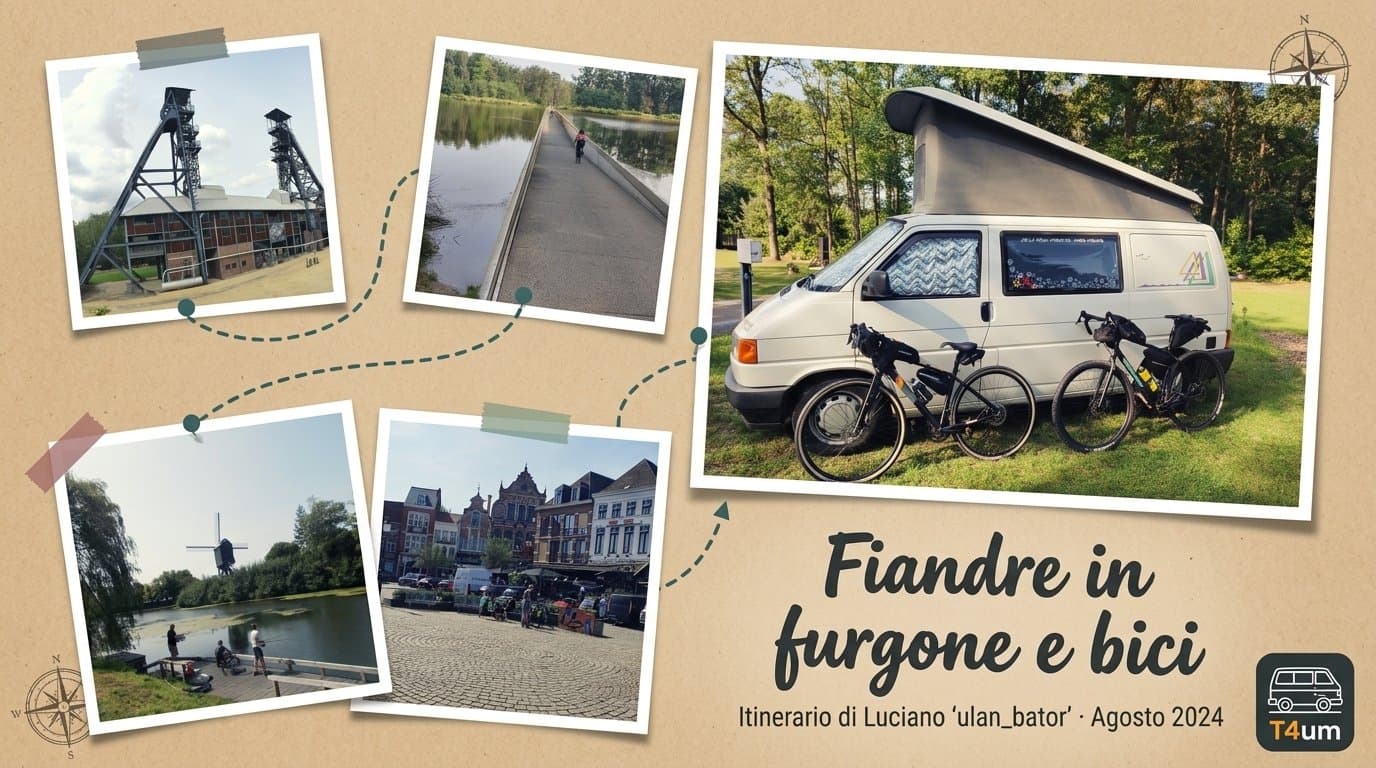
An August trip through rural France, the memory of the Marcinelle mine and the endless cycle paths of Flanders, with the T4 as home and the bikes always ready.
A story by Luciano "ulan_bator", who was the first to suggest a section dedicated to travel and opens it with this itinerary. The trip took place in August 2024: something may have changed, but probably not much. Thanks to Luciano for sharing it with the community.
At a glance
| Item | Detail |
|---|---|
| When | August 2024, from 15 August |
| Departure | The Alessandria plain, in Piedmont |
| Route | Fréjus tunnel, France, Wallonia, Flanders |
| Main stops | Chatonnay, Châlons-en-Champagne, Marcinelle, Zonhoven, Molenstede |
| Transport | T4 California and two bikes |
| Style | No timetable: the next day is decided in the evening, or at most at breakfast |
The idea came almost by chance, from a YouTube video that led to the Flanders' Finest cycle routes by Visit Flanders. A paper map, the bikes loaded, and off we go. With one fixed rule for the way out and the way back: no early starts and no endless drives, because the holiday begins the moment you leave the box.
15 August: we set off, at the crack of 11:15
Bikes loaded, a few supplies in the pantry, and we leave the Alessandria plain and its «abnormal» heat, which by now is hardly abnormal at all. We choose the Fréjus tunnel: the alternatives would go through Switzerland, and I really do not fancy Switzerland.
It rains as far as Turin and we travel cool, then the sun comes out in the Susa Valley and the air conditioning goes full blast. Traffic stays smooth though, we get through the tunnel without problems and drive until about 4 pm. On the way we also decide to stop in Wallonia before Flanders, to visit Marcinelle: a few days earlier, on 8 August, it had been the anniversary of the mine disaster.
At the snack stop we pick a campsite for the night, and after half an hour of ever narrower and more remote roads we arrive at Camping à la Ferme de Bellevue, in Chatonnay (campsite page). It is a minimalist rural campsite, the kind I like: the less stuff there is, the quieter life is. A tree-lined meadow, a few electric hook-ups and a washroom block that recalls the McKenzie farm from the Italian comic Lupo Alberto. A wooden hut with two doors, the shower behind one and the toilet behind the other, and on the sides, under the roof, a sink for the dishes, a basin with a mirror and a fridge for the guests, shaded from the sun by an awning. All clean and tidy. Besides us there are a motorcyclist, two cycle tourists, a van and a caravan.
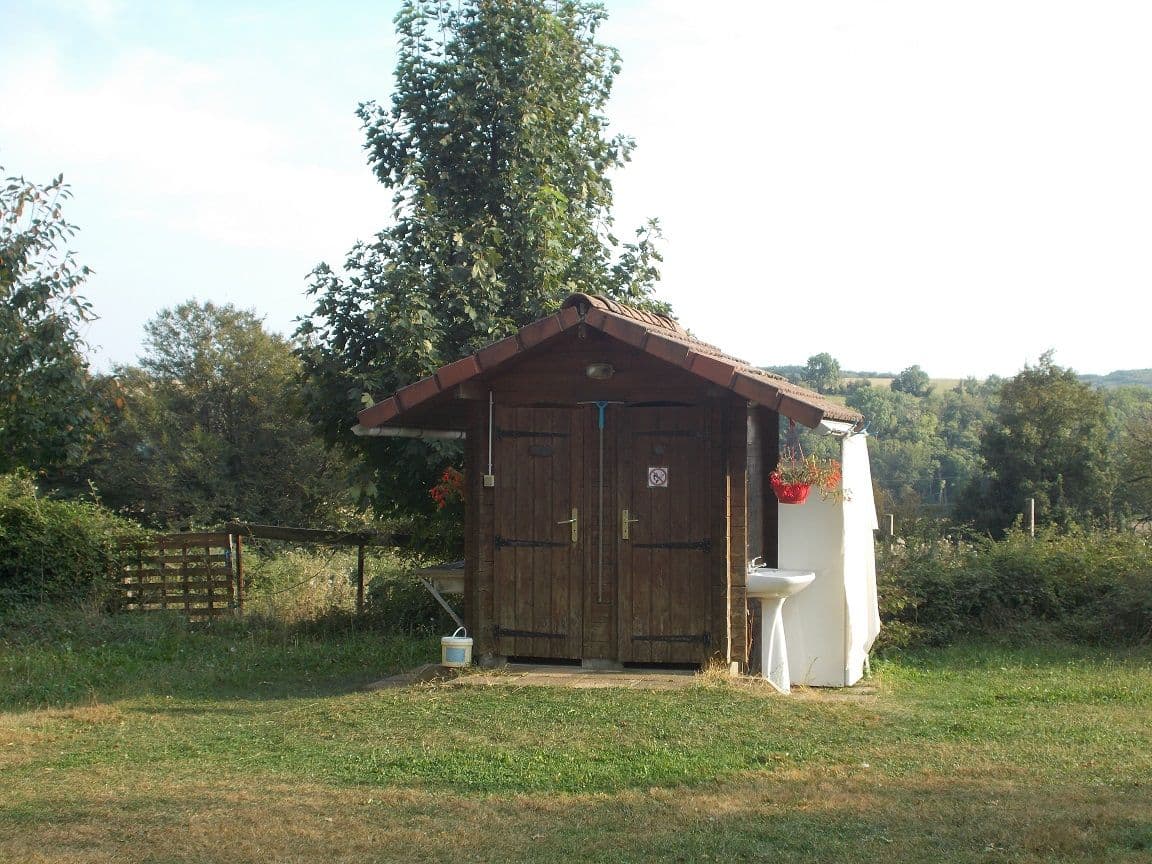
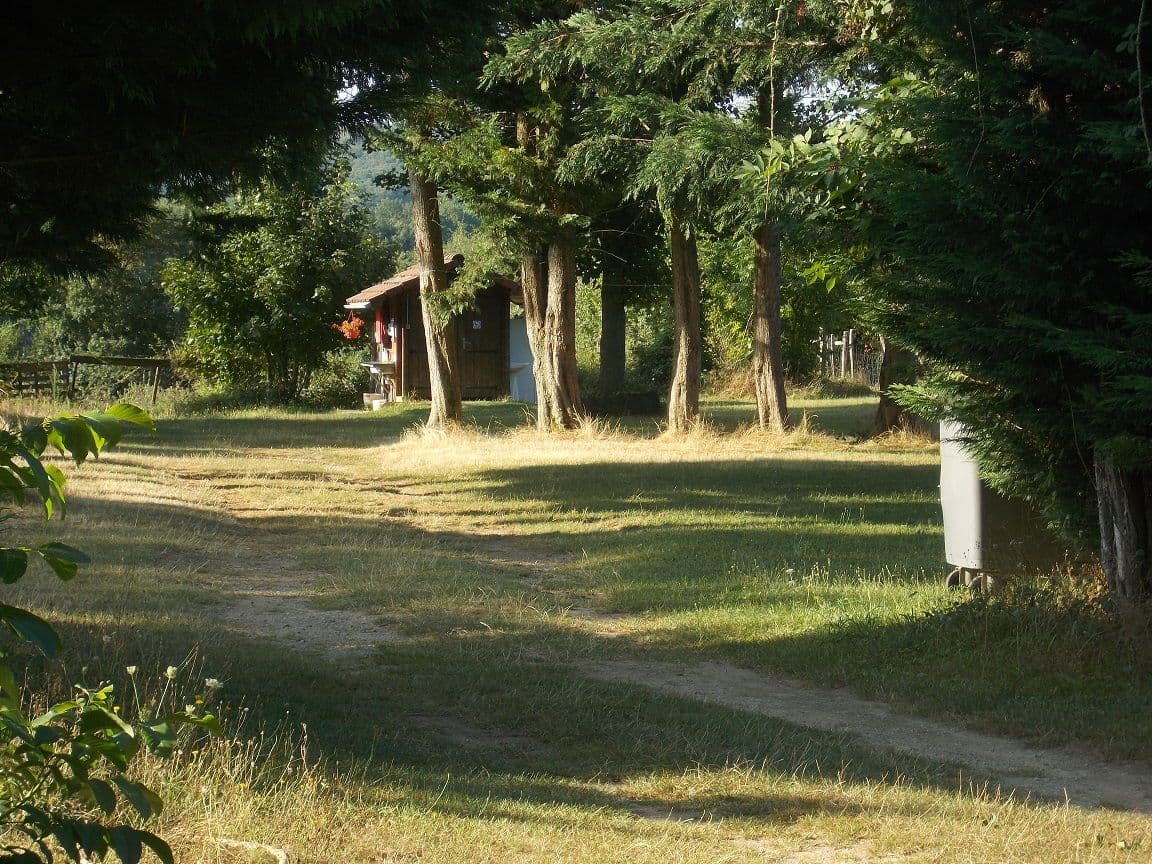
There is no reception: an A4 sign nailed to a pallet tells you not to look for one. You pitch wherever you like, and they come round before dinner. A chat with the motorcyclist, a shower, a beer, and around 8 pm a lady arrives in dressing gown, slippers and socks, with a pad of carbon-copy receipts and a biro. Ah, the good old analogue days! She asks how many nights, has me fill in my details, tears off the receipt: €13.60 for two people without electricity, tourist tax included. Cash only, no card machine.
Between the missing reception, the lady in the dressing gown and the washroom hut, I have already decided: this will be the best campsite of the holiday.
16 August: towards Champagne
We set off again in no hurry, enjoying a little more of the bucolic atmosphere. Shopping at the first supermarket, stocking up on French wines and cheeses, diesel and a few more hours on the road. The campsite we picked just past Châlons-en-Champagne is full, so we turn back a few kilometres to the Châlons-en-Champagne campsite: €20 without electricity. We order baguettes, pains au chocolat and breakfast for the next morning, then relax and have dinner.
17 August: in Wallonia
More shopping and diesel in the morning, then, still in no hurry, we head for the Belgian border. Near Marcinelle we find a spot at Chapelle-lez-Herlaimont, at the Domaine de Claire-Fontaine: a leisure centre with an aquapark, a brasserie and, set apart, a campsite. The campsite is a bit rough and ready, with lots of permanent caravans and washrooms that are not spotless, but the pitches are wide and we make do. Information for passing visitors is on the campsite page: €20 a night without electricity.
18 August: Le Bois du Cazier, Marcinelle
Today we drive the van to Le Bois du Cazier, the Marcinelle mine turned museum. It tells the story of life in the mine, the «miners in exchange for coal» agreement signed in 1946 by the De Gasperi government with Belgium, and the disaster of 8 August 1956, in which 262 miners died, 136 of them Italian. To learn more about the history there is also this article from Novecento.org (in Italian).
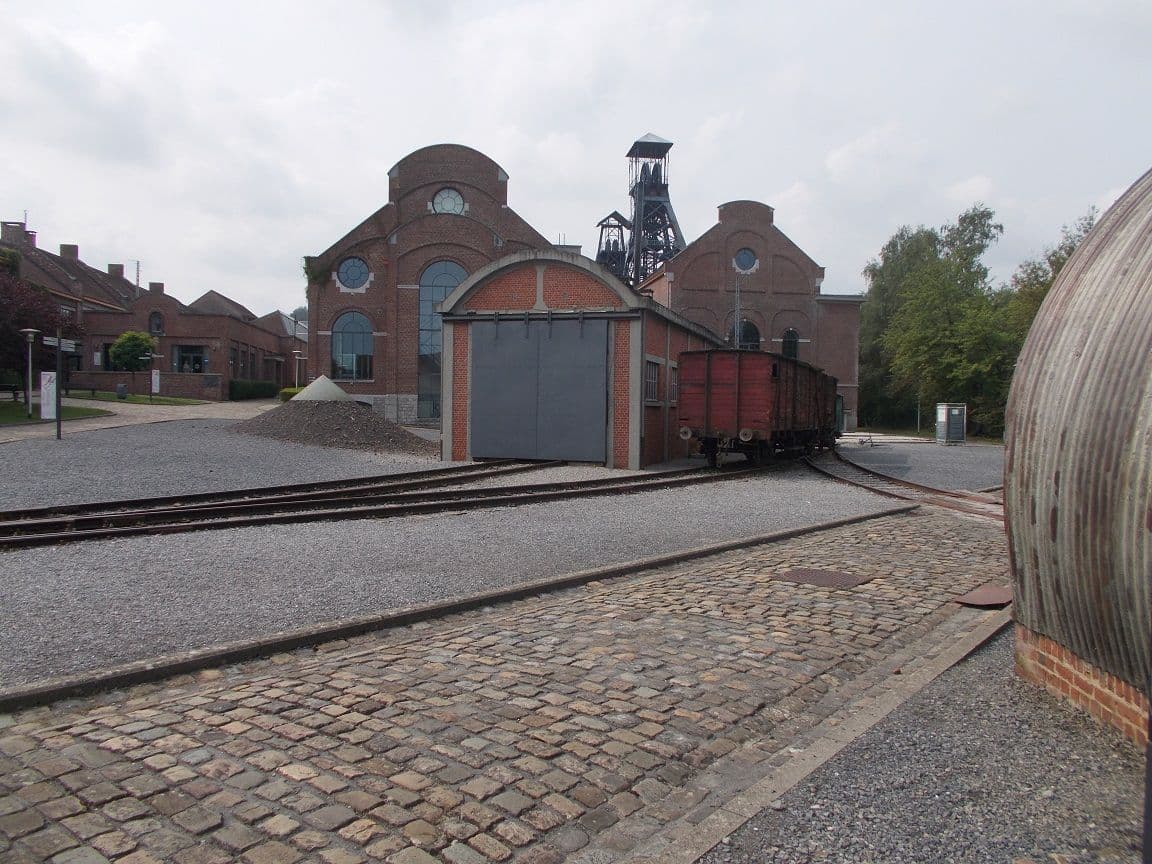
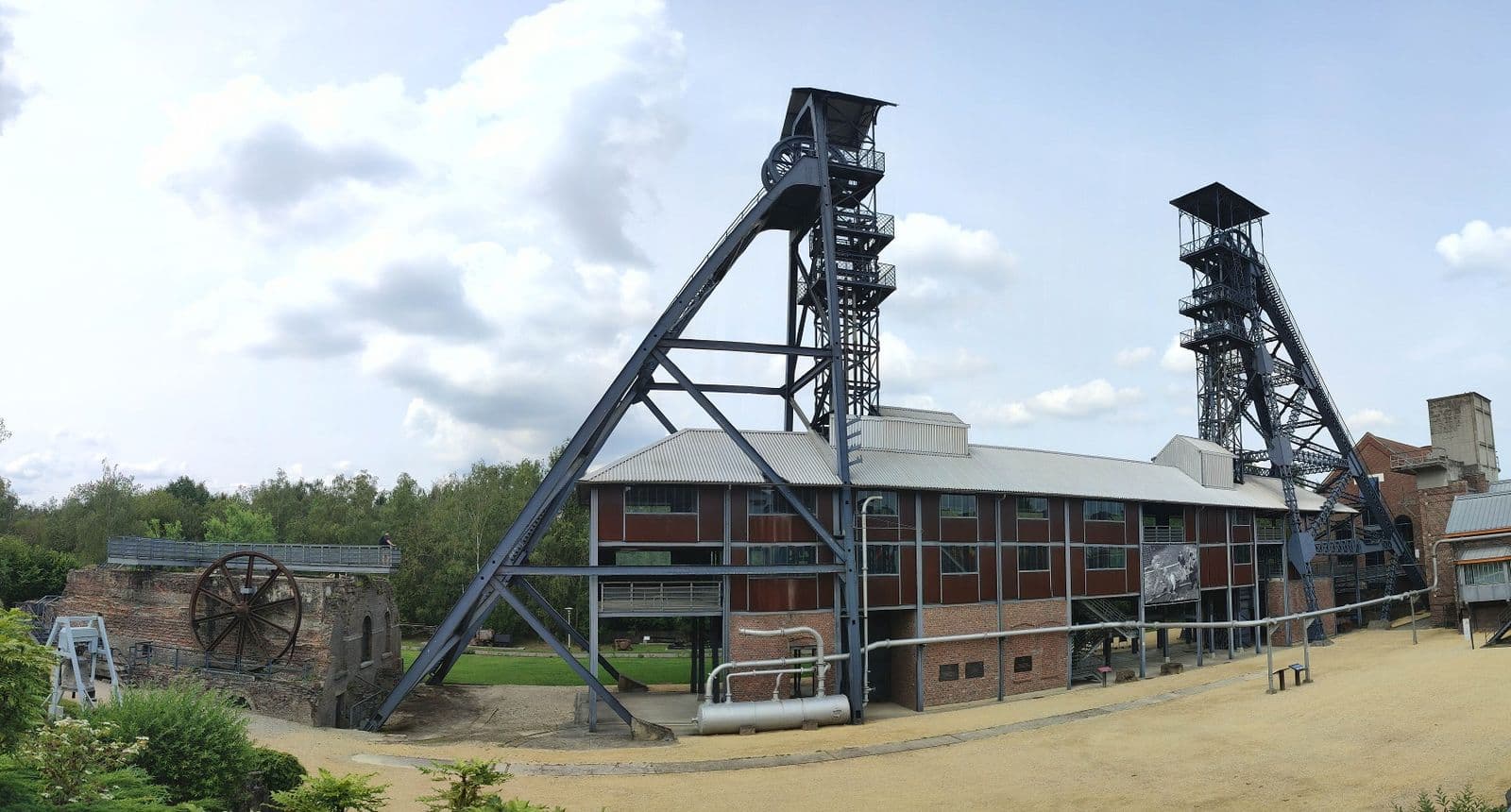
The mine itself can no longer be visited, but the museum in the surface buildings is gripping. The audio guide follows the return of a miner who survived the disaster and emigrated elsewhere, who comes back to those places today and talks to his sister, who stayed to live there. In the same complex there is also a museum of the industrial revolution and one of glass.
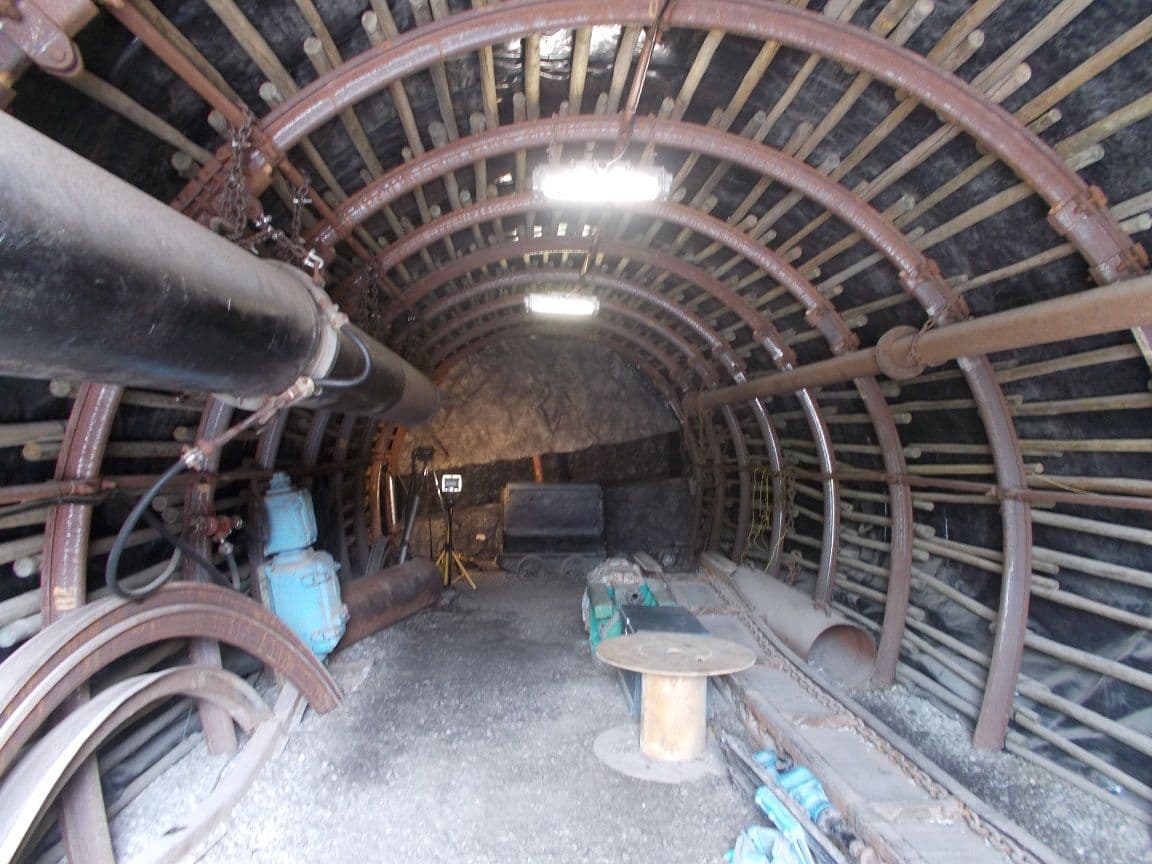
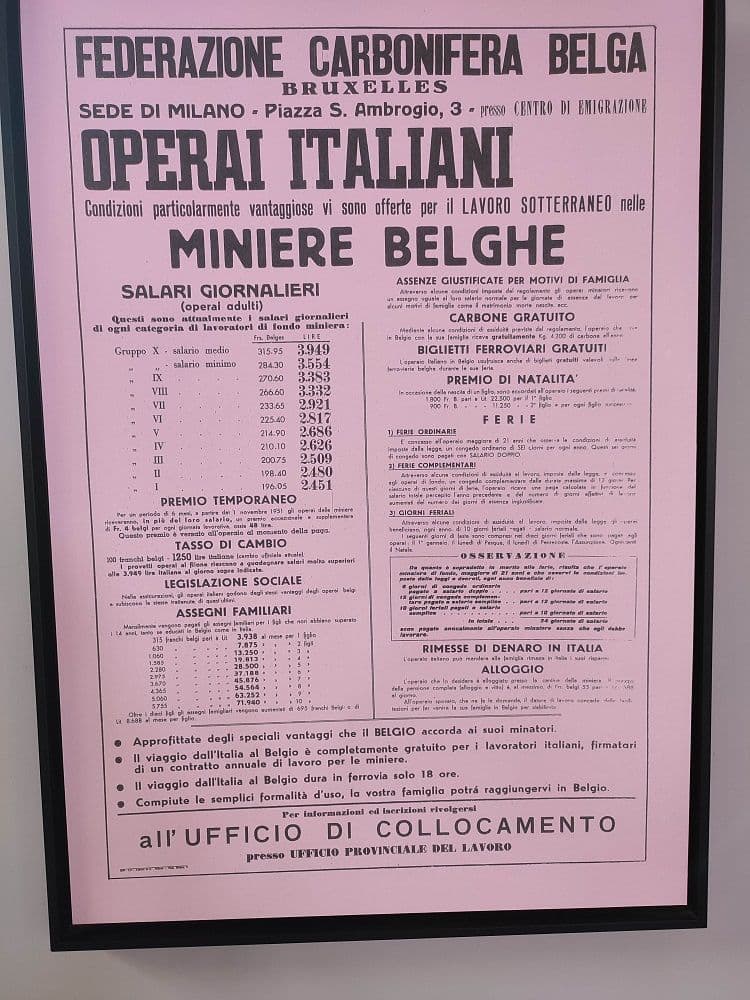
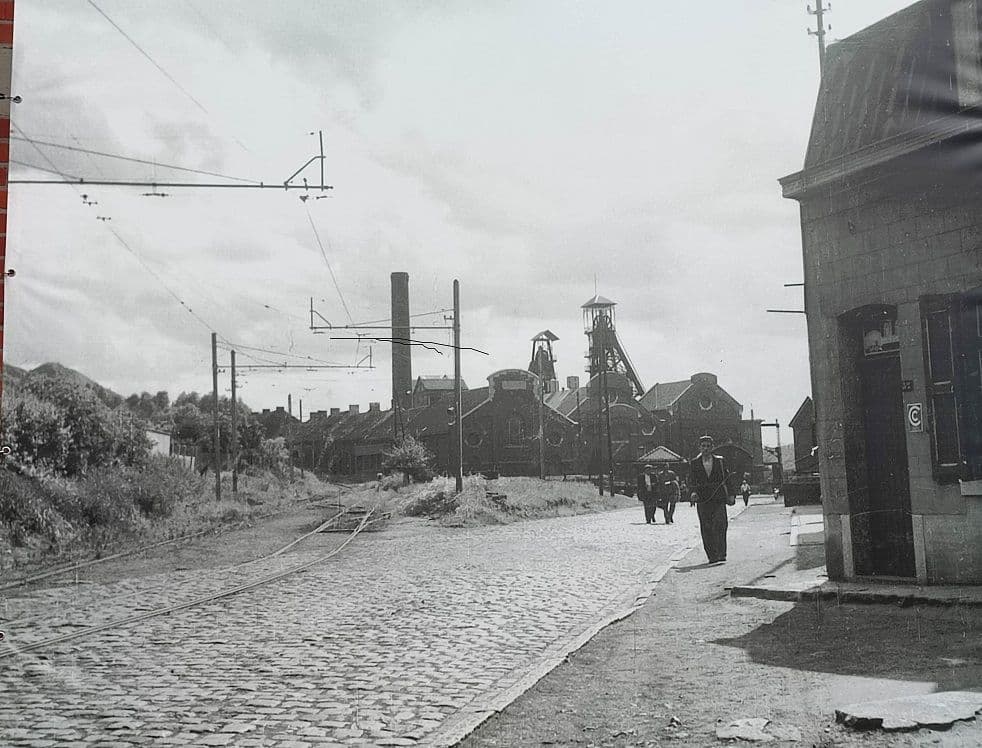
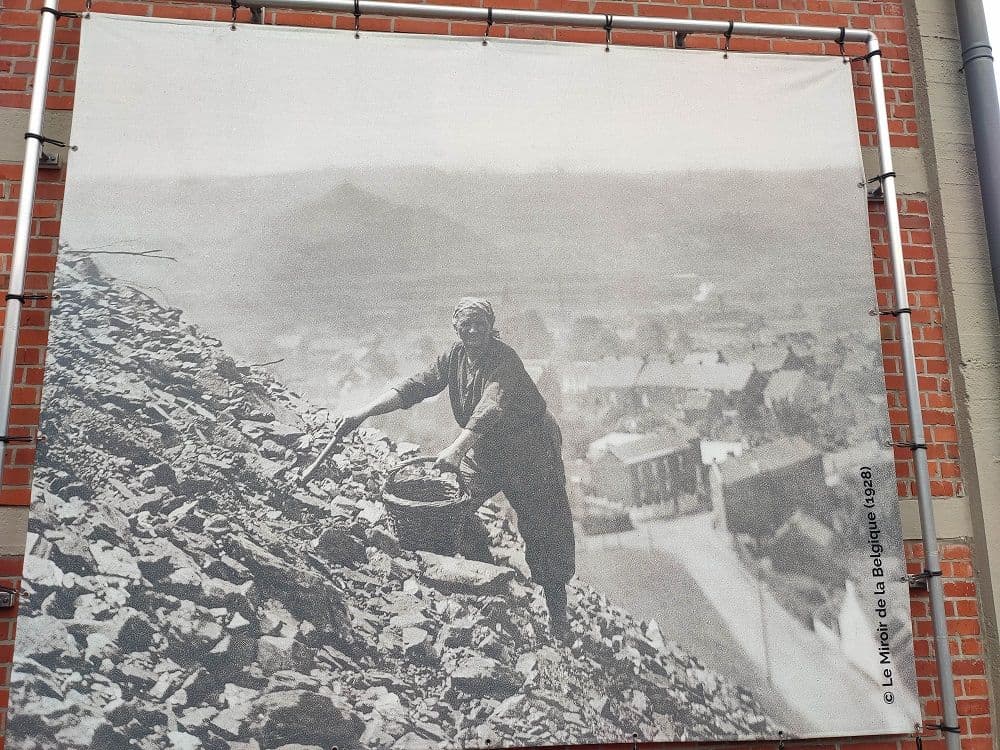
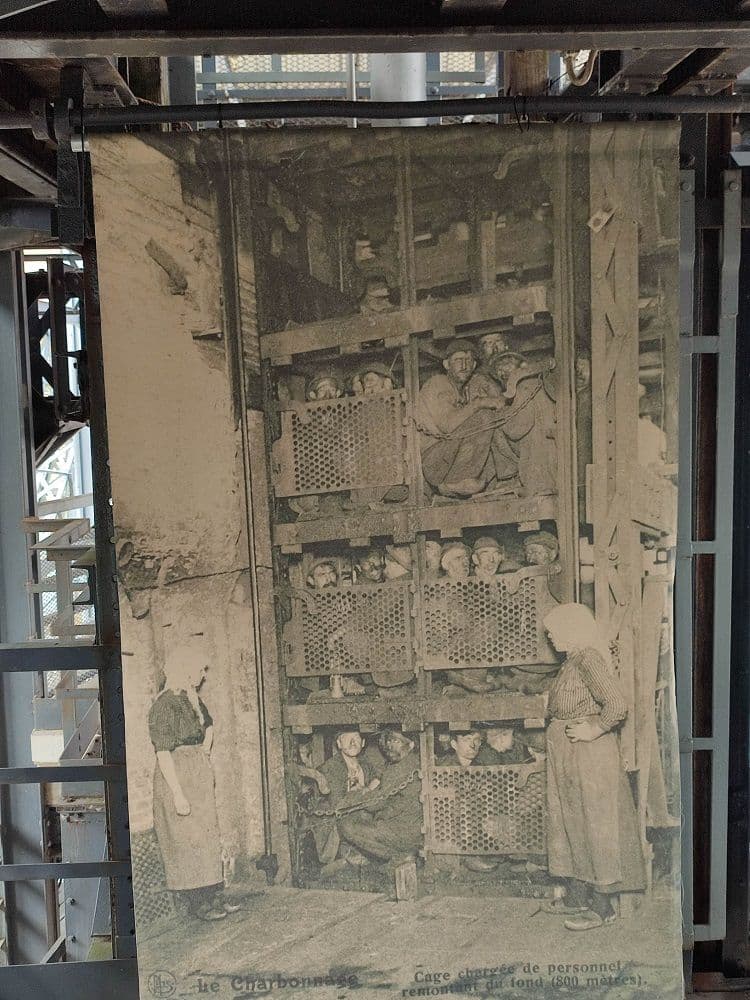
The visit keeps us busy until almost mid-afternoon. At the end we treat ourselves to a meal and a local craft beer in the museum cafeteria.
19 and 20 August: Zonhoven and the De Teut reserve
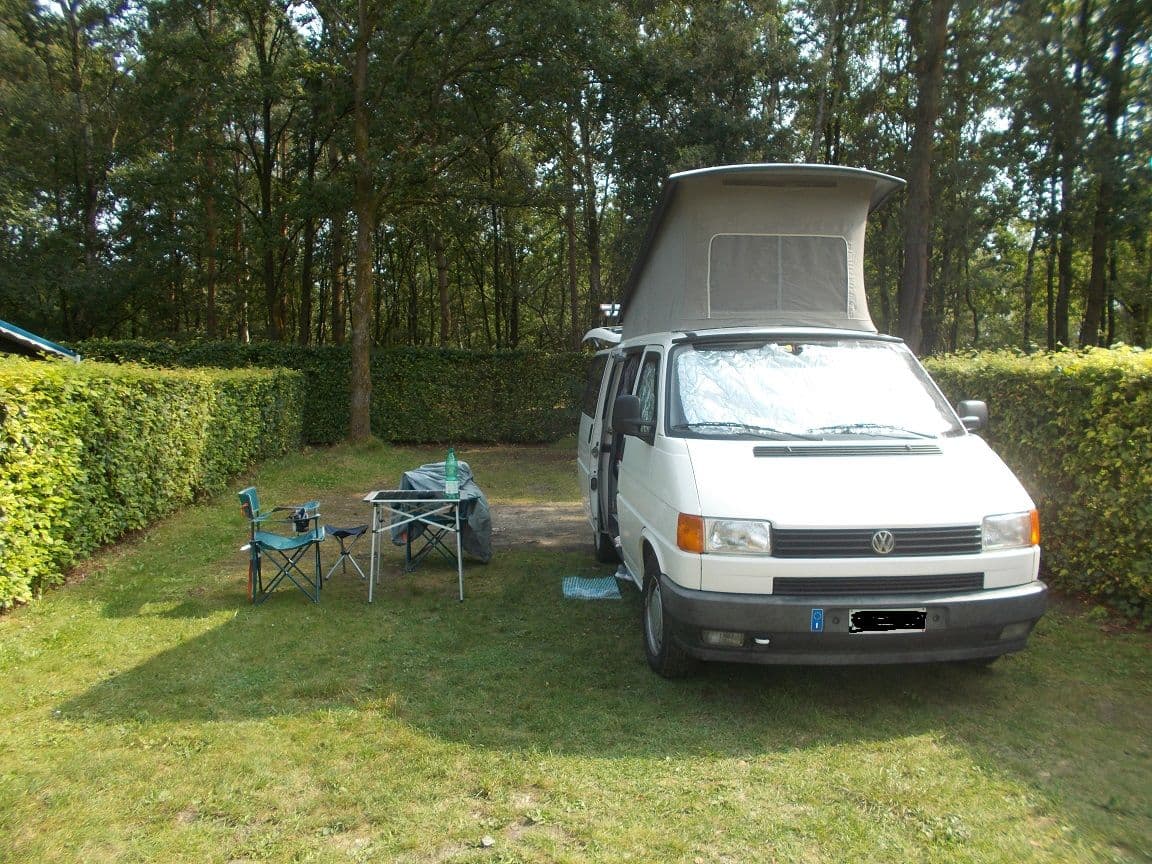
We leave Wallonia and finally enter Flanders. We stay two nights in Zonhoven, at Camping Holsteenbron: €35 a night without electricity. It is quiet and set in the De Teut nature reserve, among woods, heathland and marshes, and it becomes our base camp for some lovely bike rides in nature. On one of them we also ride through Hasselt, the capital of Limburg.
The first thing that strikes you is the almost endless network of cycle paths and routes. Every junction has a number, the so-called node, and the signs show the neighbouring nodes: by following a sequence of numbers you build your own ride, as long as you like. Many locals travel without apps or bike computers, with a slip of paper clipped to the handlebars with a clothes peg and the sequence of nodes to follow. Visit Flanders itineraries also list the sequence of nodes for every route.
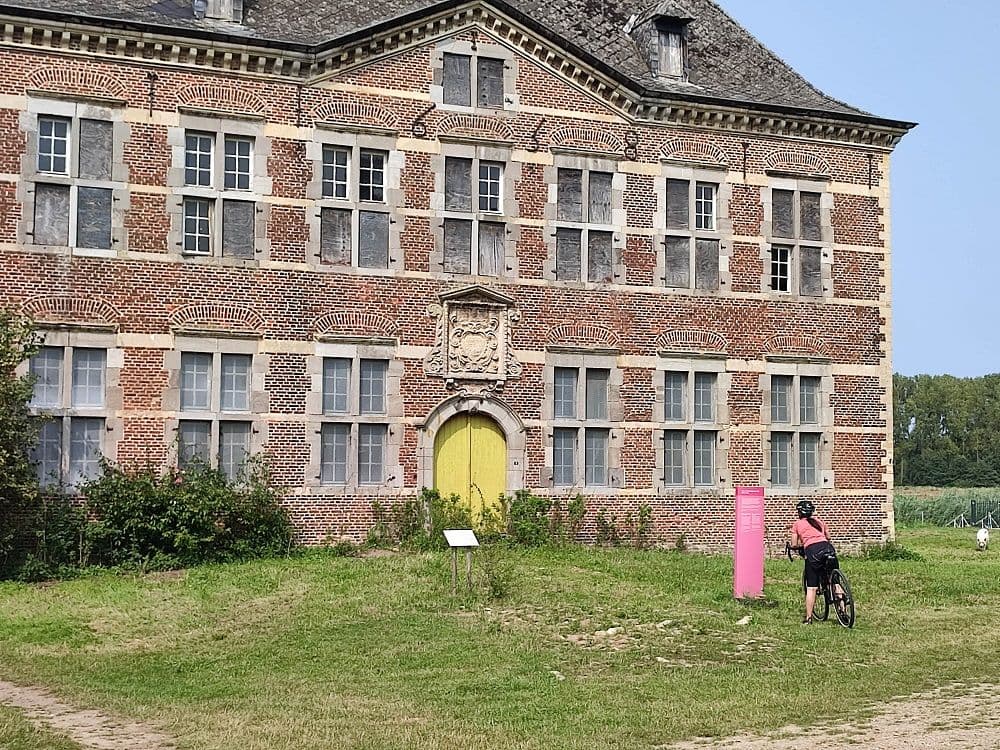
Two spots leave us open-mouthed, both built specially for pedestrians and cyclists. The first is the path that crosses a small lake through a «cut» in the water. The second is an elevated circular path that rises among the treetops of the forest.
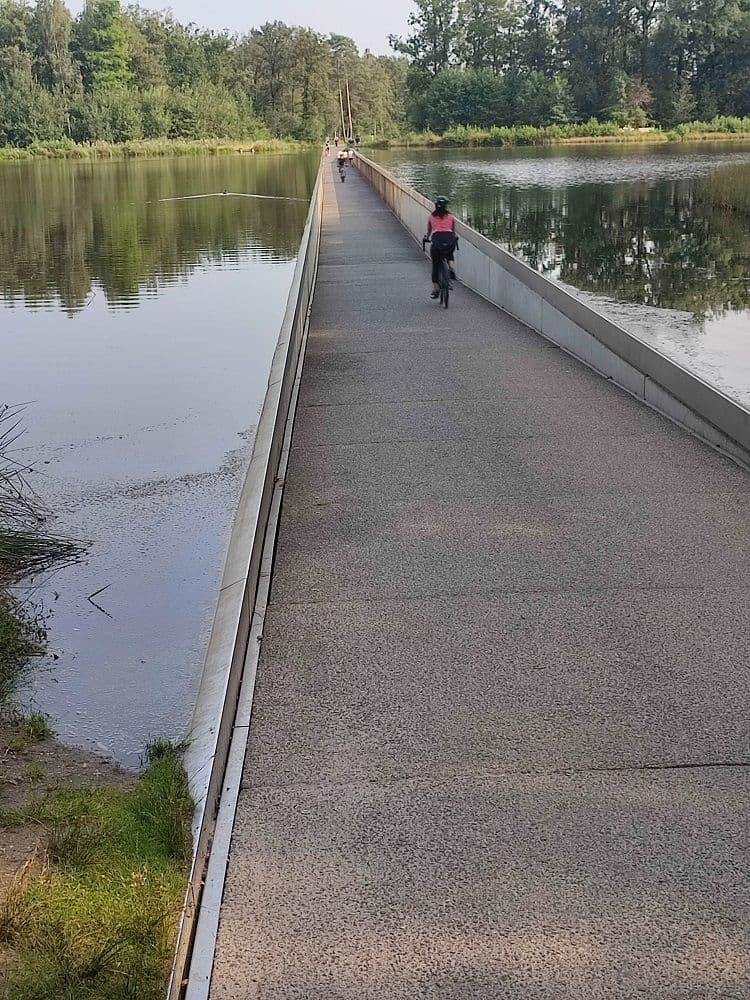
A dream, for much of Italy, where we shout «miracle» for a few kilometres of cycle path. A ride around here would do plenty of ministers and councillors, past, present and future, a world of good.
21 and 22 August: Molenstede and around
We move on to Molenstede and find a spot with no trouble at the Het Swinnenbos campsite, a few pedal strokes from the centre: €23 a night without electricity.
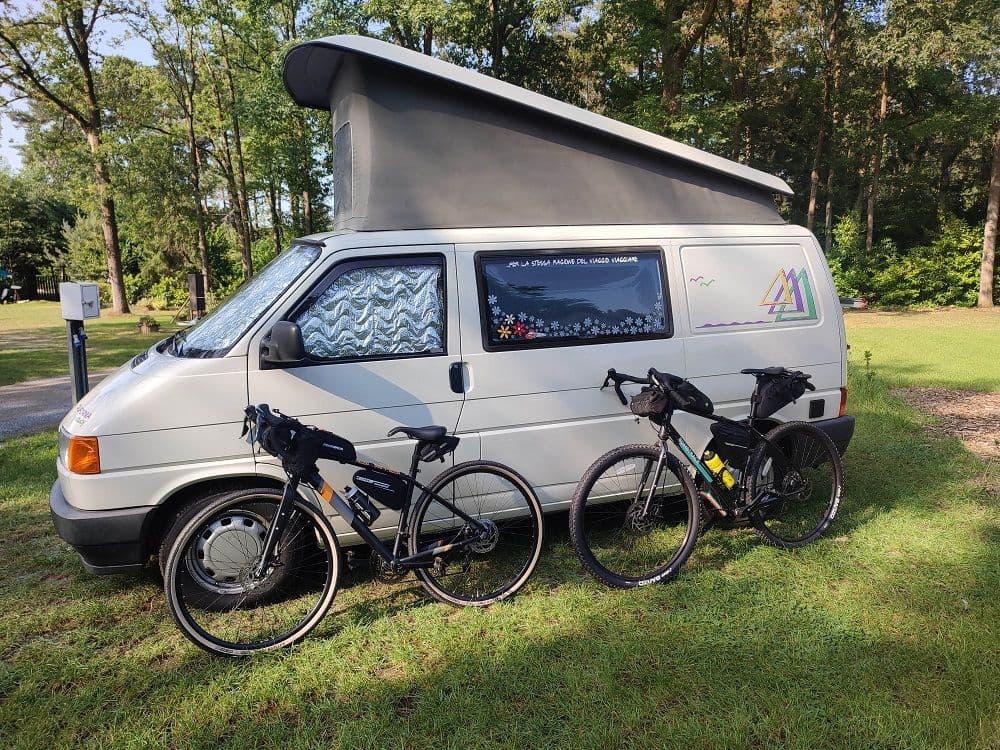
From here too we put together a couple of routes, less immersed in greenery but almost all on cycle paths. This time we use a well-known hiking app. Along the way we make a few stops:
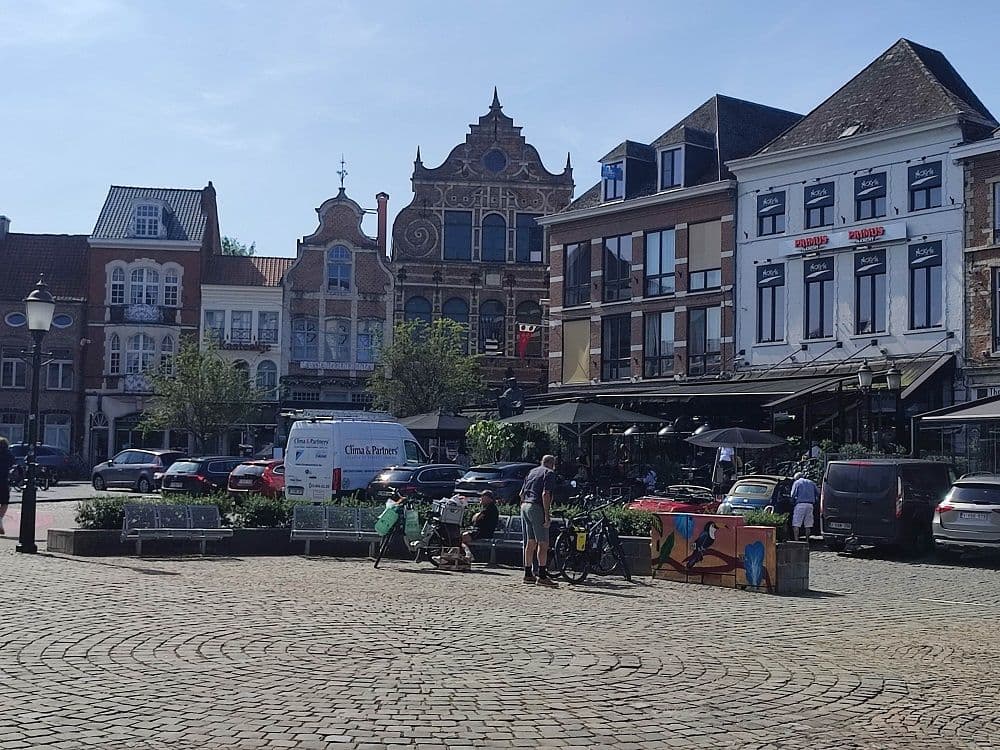
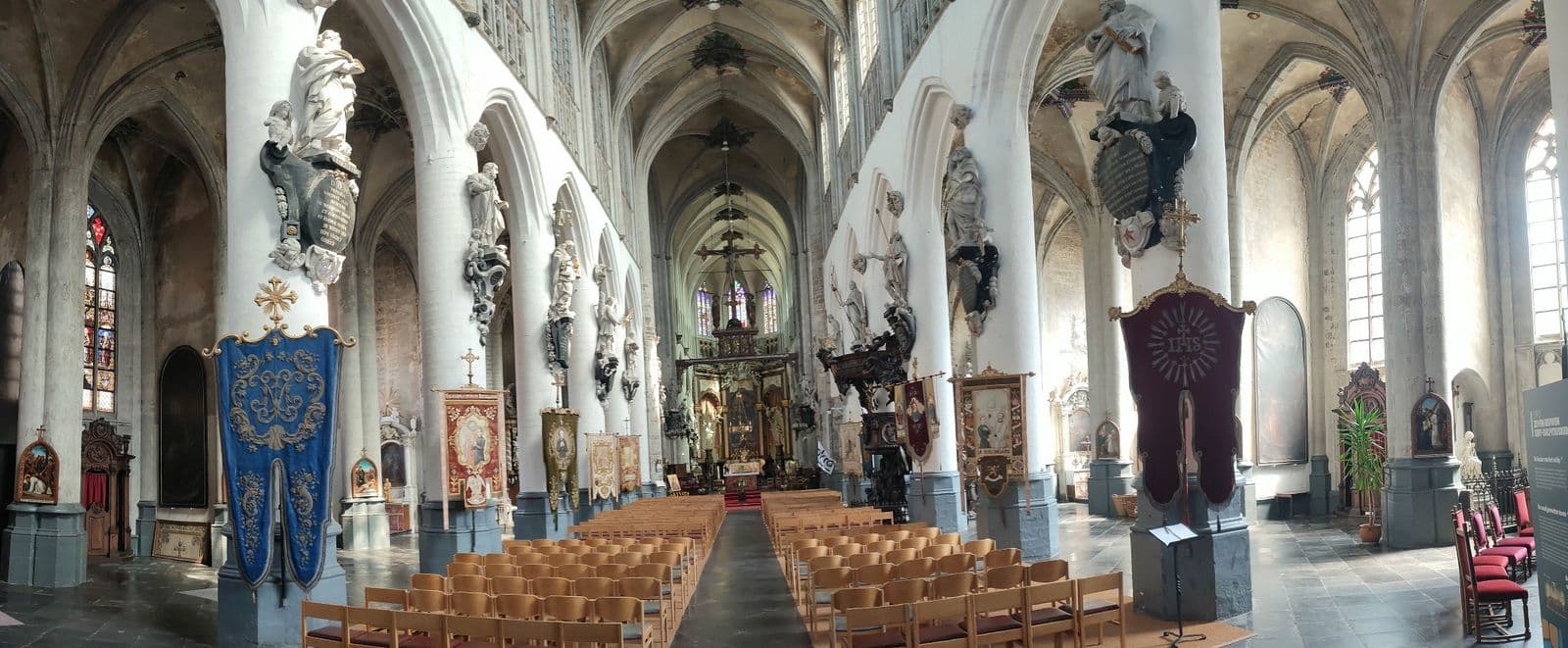
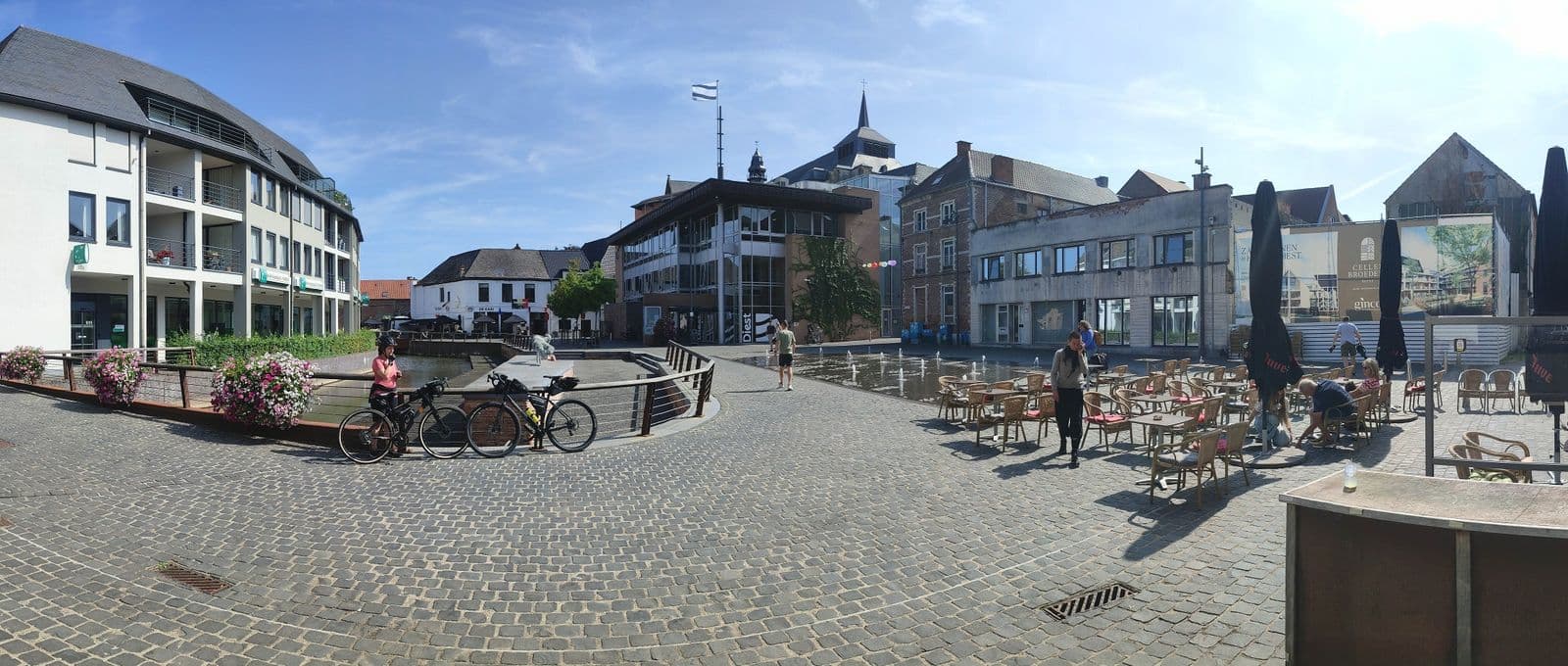
- Diest, for a lunch break, with the market square and the church of St Sulpicius;
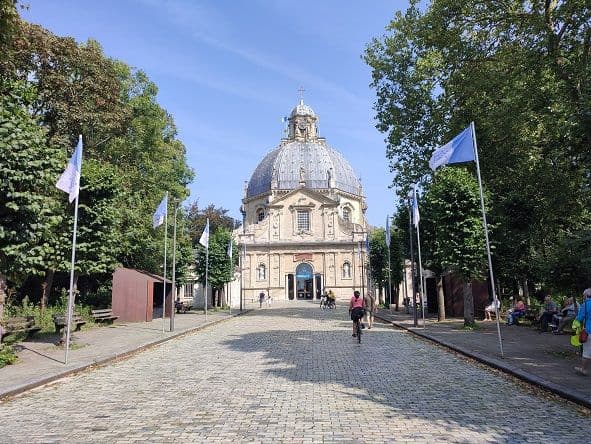
- the basilica of Scherpenheuvel, which does not thrill us but gives us a moment of relaxation;
- the abbey of Averbode, where we have a snack with the inevitable beer brewed there.
The campsites of the trip
All prices are for two people, without electricity.
| Nights | Campsite | Place | Price per night (2024) |
|---|---|---|---|
| 15 August | Camping à la Ferme de Bellevue | Chatonnay (France) | €13.60, cash only |
| 16 August | Camping de Châlons-en-Champagne | Châlons-en-Champagne (France) | €20 |
| 17 and 18 August | Domaine de Claire-Fontaine | Chapelle-lez-Herlaimont (Wallonia) | €20 |
| 19 and 20 August | Camping Holsteenbron | Zonhoven (Flanders) | €35 |
| 21 and 22 August | Het Swinnenbos | Molenstede (Flanders) | €23 |
A tip for cycling in Flanders
You do not need an app: just note down the sequence of nodes for the route and follow it junction by junction. The Visit Flanders itineraries give it ready-made, and if you like you can combine nodes to build a ride to measure, in distance and time.
The story continues: the next days will be added below as Luciano writes them.