Dynamic injection pump timing on the 2.5 TDI ACV: checking and adjusting it with VCDS
With VCDS you can check whether the injection pump on the 2.5 TDI is in time and, if needed, correct it by turning the eccentric idler, without redoing the timing belt.
On T4 TDIs the pump timing is often set "by the marks": the mechanic marks pulleys and belt with a marker pen, puts everything back as it was and lets the electronics compensate. The engine starts and runs, but it is not always within the values VW specifies. This guide explains how to read the so-called dynamic timing and how to bring the pump back into the correct range.
Guide based on the post by Vinx "GuidoPiano" on the T4UM forum (original discussion), revised and updated for t4um.it.
At a glance
| Item | Details |
|---|---|
| Engines | 2.5 TDI ACV (and the T4 TDIs with an electronically controlled pump in general) |
| Tools | VCDS with diagnostic cable, PC |
| Hand tools | 16 mm ring spanner, Allen key, spanners for the timing belt cover, short screwdriver |
| Time | Varies: the adjustment is done by trial and error, with a reading after every tweak |
| Difficulty | Medium: it takes precision and care when working with the belt exposed |
How it works
The pump has to inject the fuel at the right moment. If it injects too early, combustion starts while the piston is still rising towards top dead centre: the engine knocks. If it injects too late, combustion starts late, the engine loses power and smokes when starting.
On T4 TDIs the pump has an electronic valve, the N108, which with the engine running continuously corrects advance and retard relative to the fitted position. The ECU compares two sensors: the engine speed sensor, which tells it where the crankshaft is, and the needle lift sensor on one injector, which tells it when injection happens. Based on the difference, it drives the N108.
During cranking, however, the N108 can do nothing: the engine starts on the mechanical setting of the pump alone, like an old diesel with a conventional pump. That is why the basic timing has to be right, and "the electronics will sort it out anyway" is not enough.
What "dynamic timing" is
The name is misleading: it is a measurement of the static advance, that is the basic timing of the pump, but taken with the engine running. With VCDS you enter the basic settings: the ECU switches off the N108 control and the pump works on its mechanical timing alone, while a graph shows where it sits.
During the test the glow plug light flashes and the engine note may change. The more it changes, the further the basic timing is from the right value, and the harder the N108 is working to compensate during normal driving.
Reading it with VCDS
The engine must be running and warm, with the coolant at 80 °C at least.
- Start VCDS and click Select.
- Choose 01 - Engine.
- Click Basic Settings: the glow plug light starts flashing.
- Click TDI Timing.
- Pick the engine code from the drop-down menu.
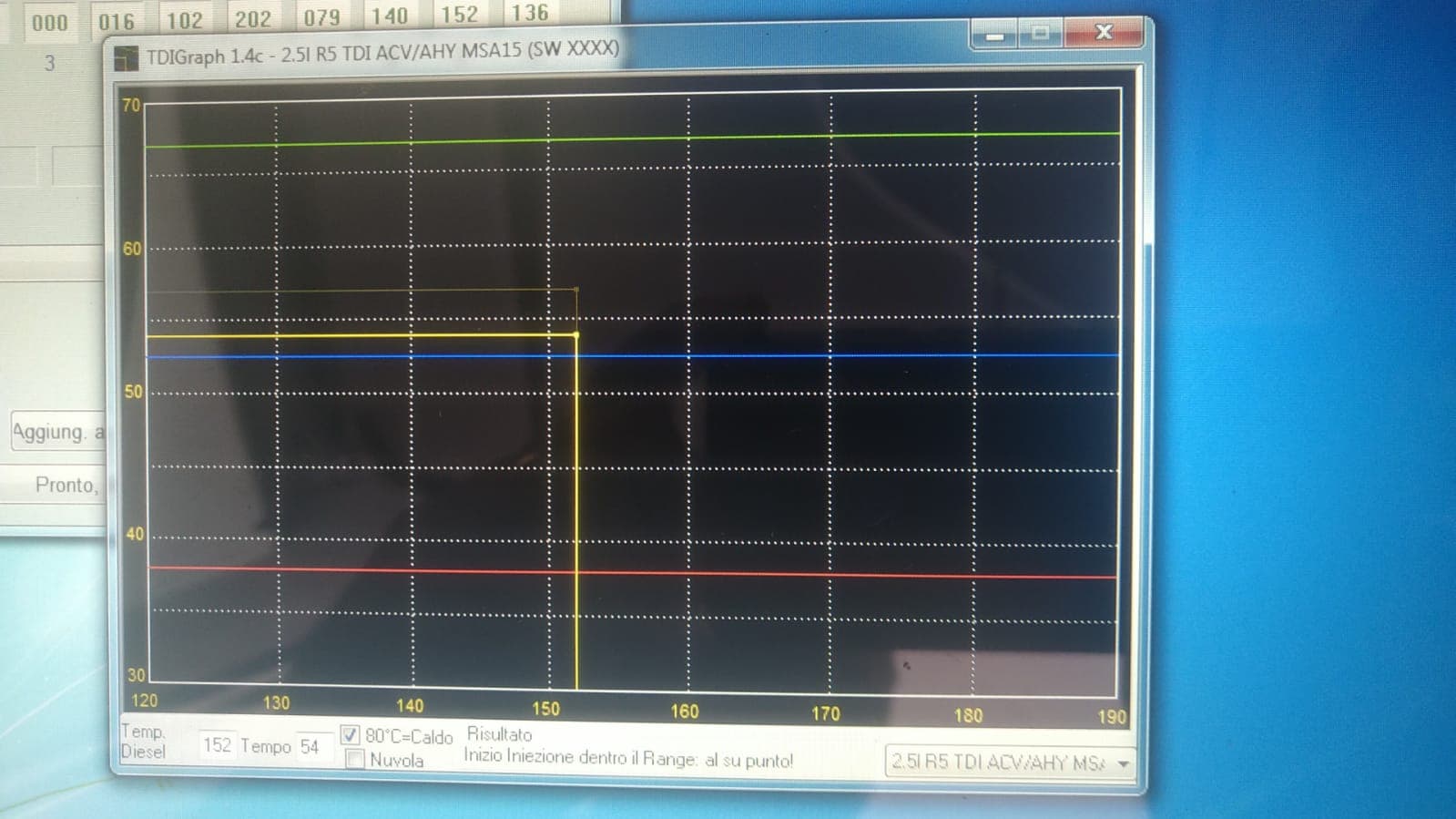
How to read the graph
| Element | Meaning |
|---|---|
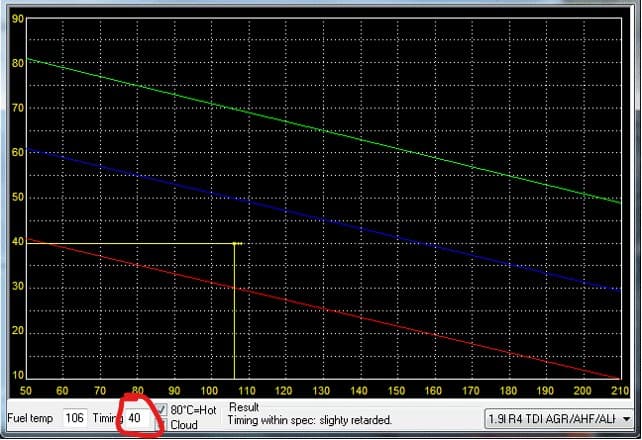
| Green line | Maximum advance allowed by VW |
| Blue line | Optimal value |
| Red line | Minimum advance allowed |
| Yellow line | Where your pump is |
| Timing box | The measured value, which fluctuates slightly |
If the advance is too high, the yellow line turns into a vertical line that runs off the graph. If it is too low, the graph is barely visible and only the value in the box is left: in that case it is a small miracle that the engine started at all.
On ACVs up to 1999 the reference lines are sloped; on ACVs from model year 2000 they are horizontal.
A real case: pump too far advanced
On a 2000 ACV the van seemed fine: instant start, no smoke. With VCDS connected, though, the value in the Timing box was 87, well above the maximum allowed. The yellow line shot straight up off the graph, instead of settling between the red and the green line.
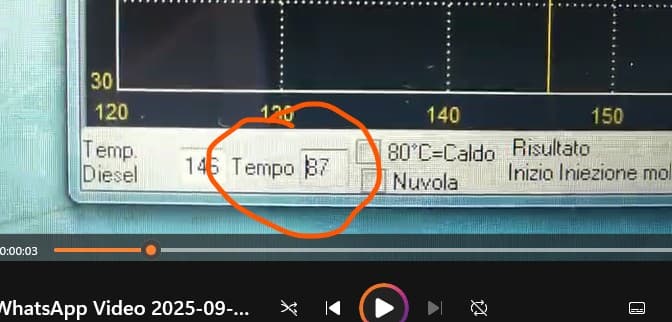
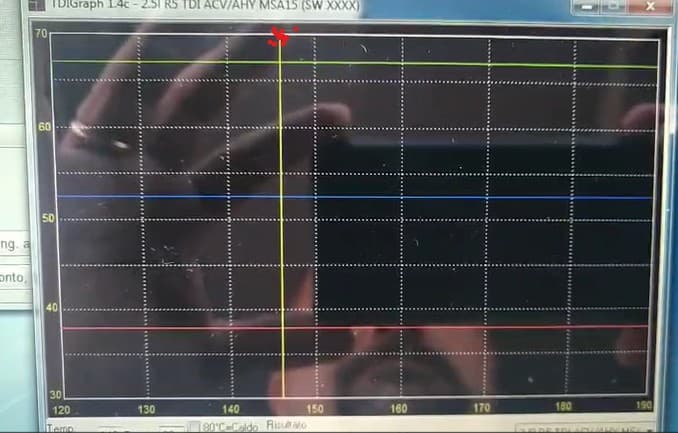
An engine that "runs fine" is not necessarily in time: with a pump this far advanced, the N108 is constantly working to compensate. Hence the decision to correct it.
Removing the timing belt cover
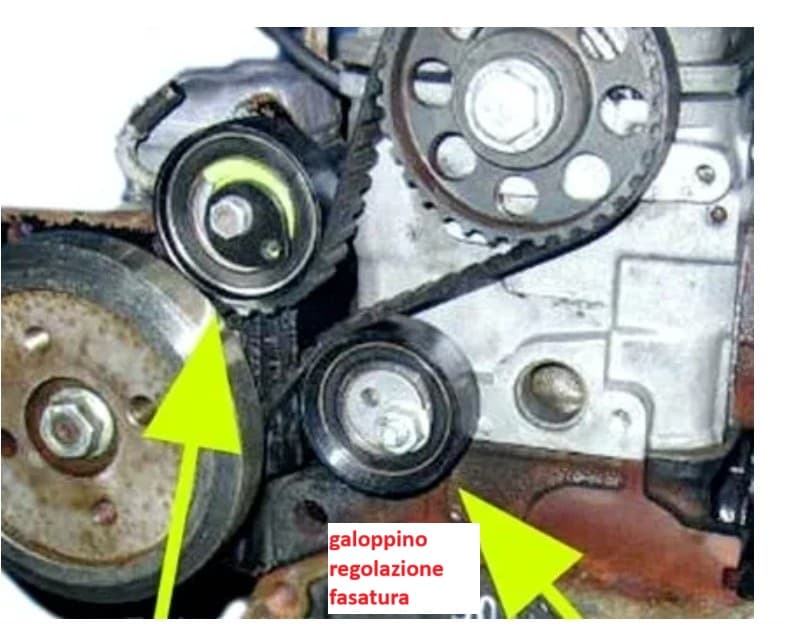
To reach the idler you have to remove the timing belt cover on the pump side.
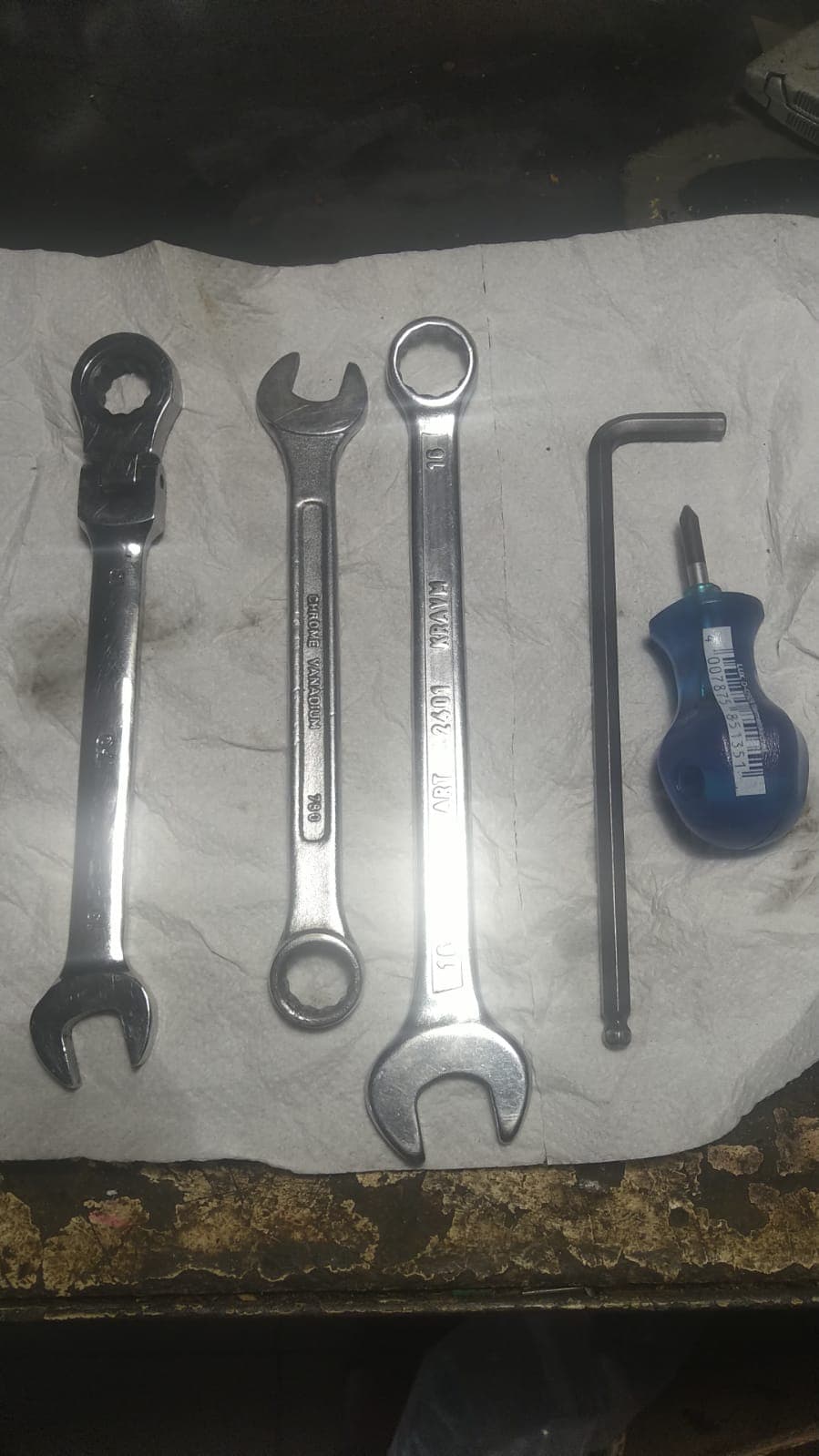
- Remove the cover as one piece: if you first take off the small lid on top and then the cover itself, you do the job twice, and you also need a short screwdriver.
- Watch out for the clips holding the vacuum hose.
- Before touching anything, work out the engine's direction of rotation and mark it on the pulley: you need it to know which way advances and which way retards.
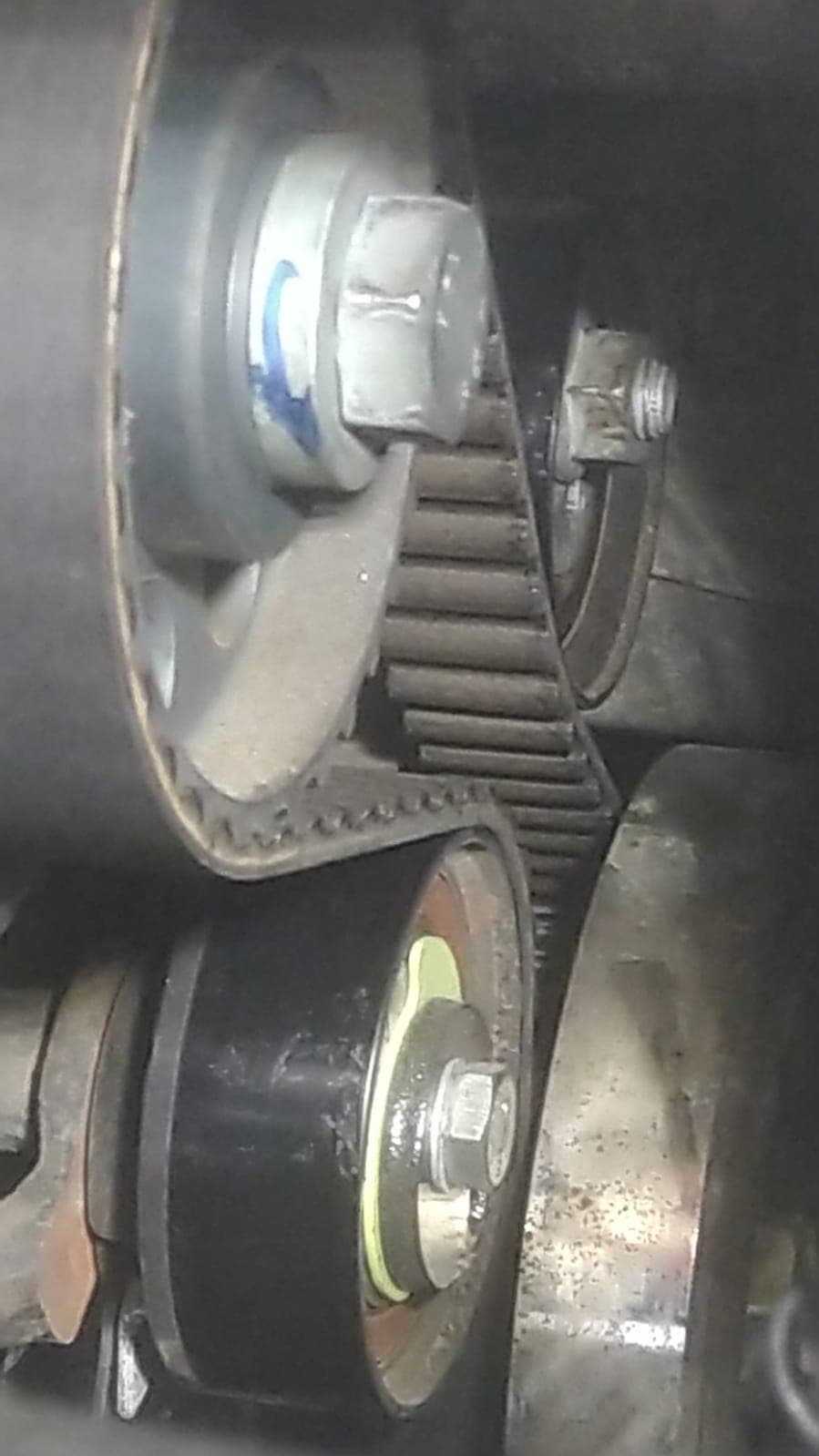
The adjusting idler
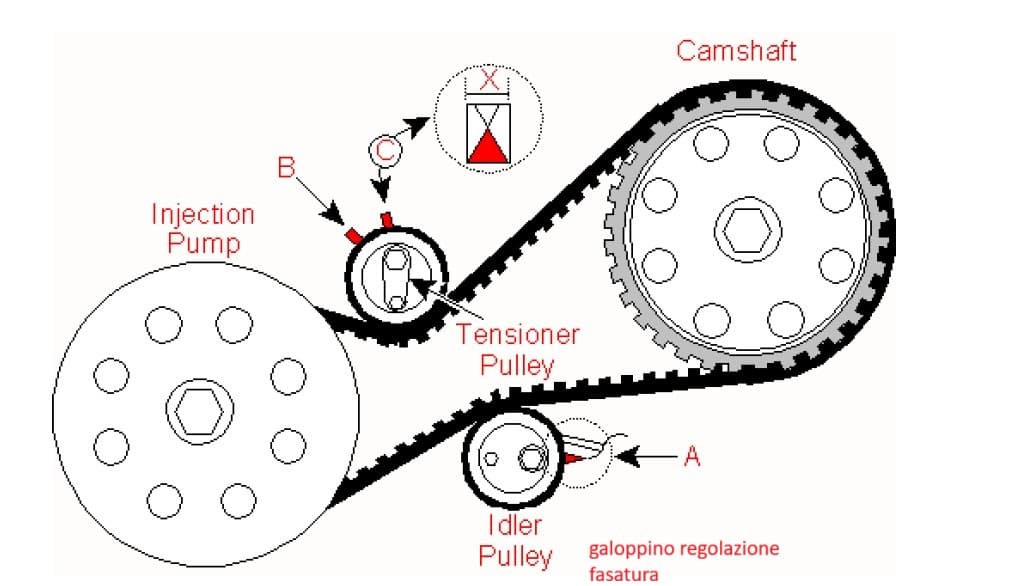
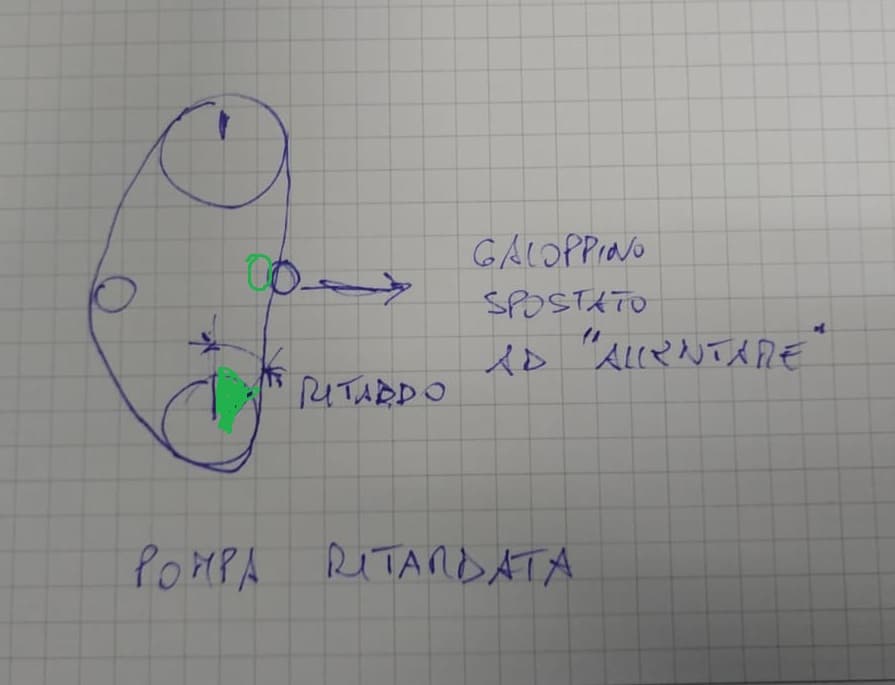
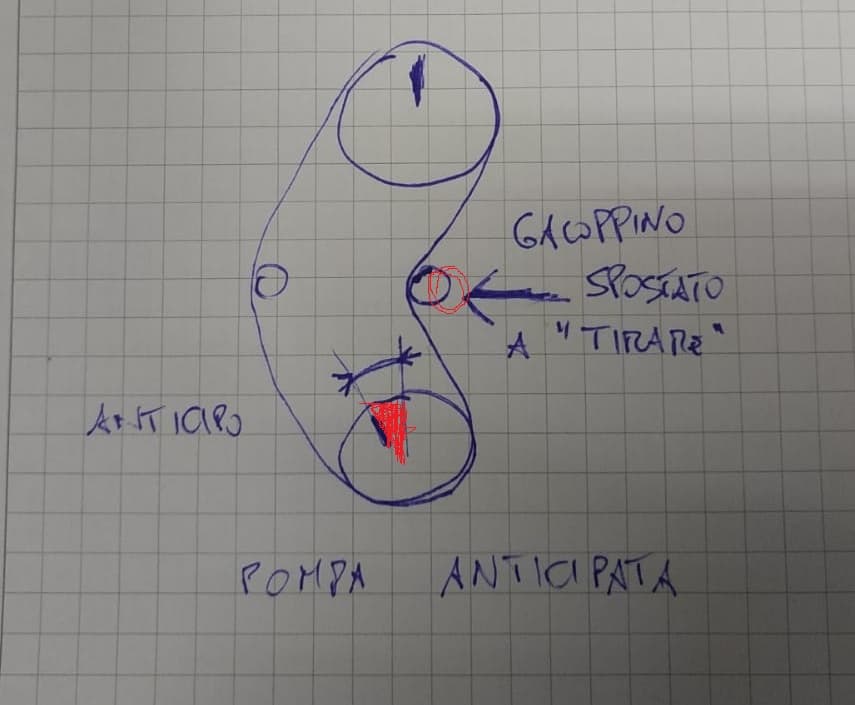
For small corrections VW provided a simple system: an idler mounted on an eccentric pin. Turning it moves the idler and changes the length of the stretch of belt between the camshaft pulley and the pump pulley. This shifts the pump timing slightly relative to the camshaft, either advancing or retarding it.
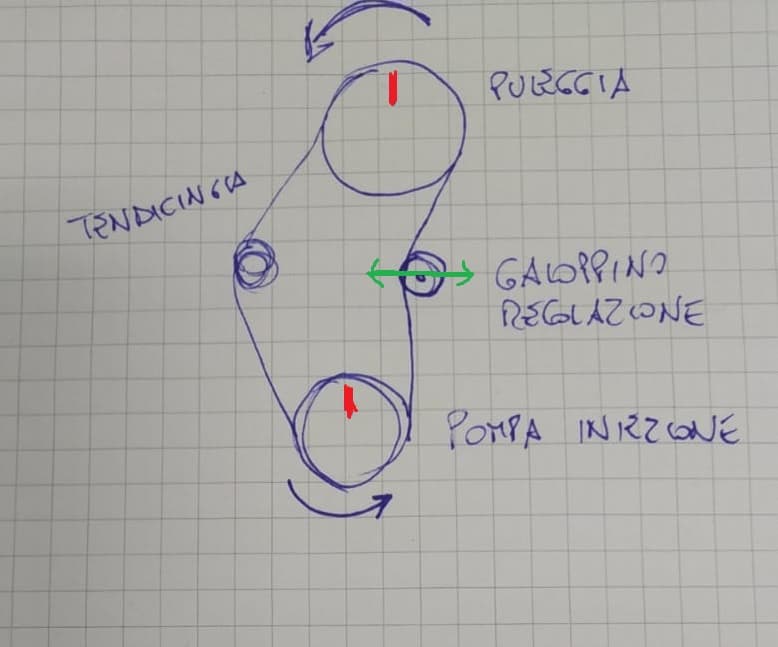
| Idler movement | Effect on the pump |
|---|---|
| Inwards, "tightening" the belt | Advances |
| Outwards, "slackening" the belt | Retards |
Step-by-step adjustment
In the case described the pump was too far advanced, so it had to be retarded.
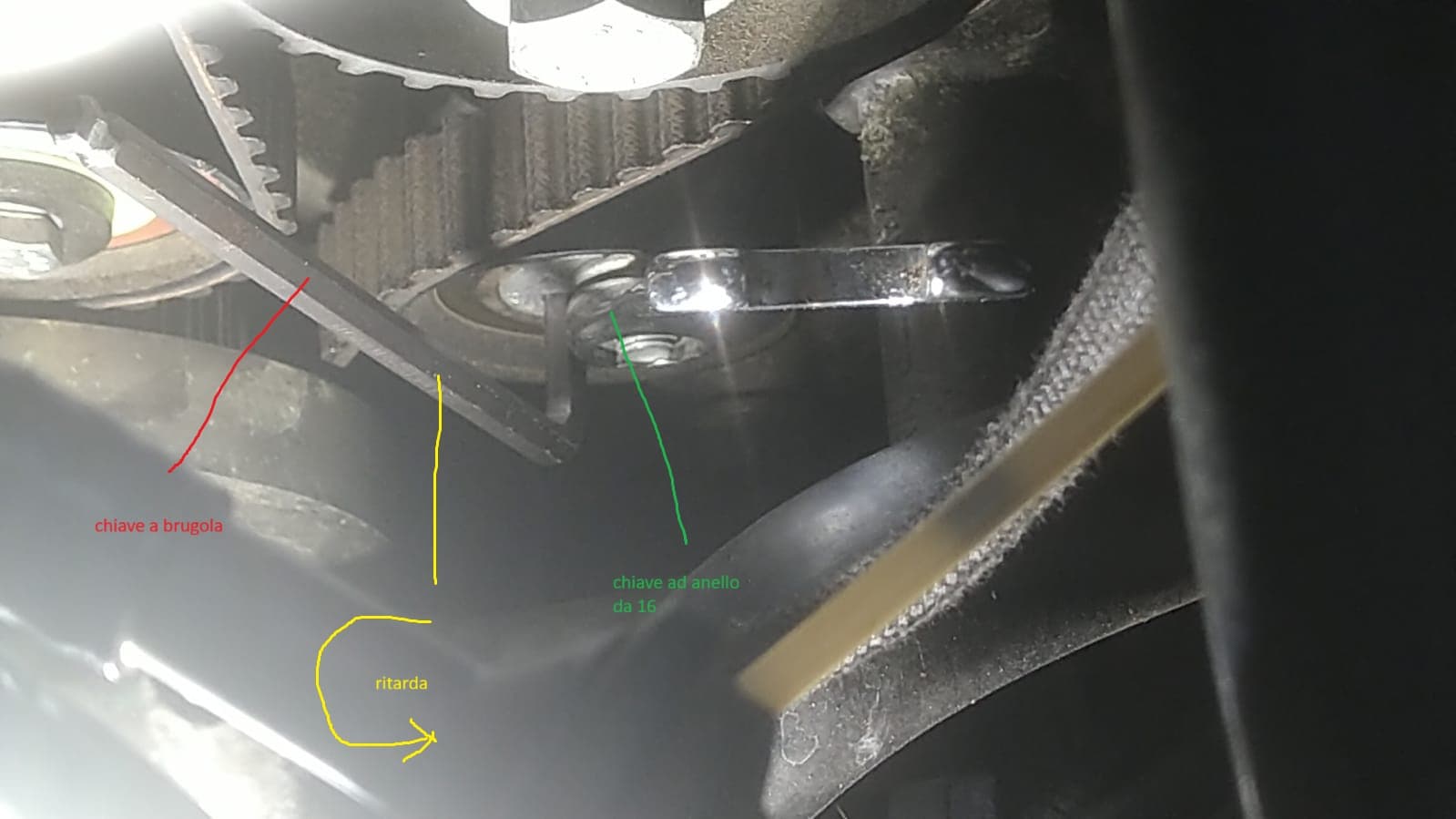
- Hold the eccentric pin with the Allen key and loosen the 16 mm nut of the idler, just enough to be able to turn it: do not remove anything.
- Turn the idler with the Allen key. In this case, to retard, the rotation was anticlockwise, as in the photo.
- Holding the Allen key still, tighten the 16 mm nut again.
- Make sure you have not left any tools in the engine bay and secure any hoses and wiring running close to the belt: the engine will run without its cover.
- Start the engine, connect VCDS, wait for the coolant to reach at least 80 °C and read the graph again.
- If the value is still out of range, switch off and repeat from step 1.
You will rarely hit it first time: you get to the right value through small attempts.
Final check
Once the adjustment is done, the yellow line settles near the blue line and the program confirms that start of injection is within range. In the case described the value went from 87 to 54.
Moving the idler also changes the belt tension, so the last check is on the tensioner: the preload pointer must line up with the reference triangle. If it does not, correct the tension and take the VCDS reading again, because the tensioner can also shift the timing slightly.